
Auditory obstruction can be unsettling, often making you feel isolated from the world around you. While the fear of lasting hearing deterioration is a common first response, the actual source is frequently a simple collection of canal debris.
Distinguishing between a wax impaction and true hearing loss is vital for determining if you need a simple cleaning or a formal audiological exam. If you’re experiencing dull hearing, don’t panic. An exam can help you get to the bottom of it, but in the meantime, here’s what you should consider about canal blockage (also known as earwax blockage) vs. hearing loss.
What Earwax Buildup Feels Like
Your ears produce wax as a natural protective process to maintain health and keep debris away from the eardrum. The difficulty starts when this material accumulates to the level of a physical obstruction.
Typical indicators of an obstruction include:
- Dampened sound clarity that occurs gradually or overnight
- A feeling of fullness or blockage in the ear
- Overall ear discomfort or mild soreness
- Localized tinnitus within the affected ear
- Auditory sharpness that changes or improves momentarily with jaw movement
Because blockages are physical, they commonly affect just one ear at a point rather than both equally. The good news is that clinical clearance typically results in an instant restoration of your original hearing capacity.
What Hearing Loss Feels Like
Unlike a temporary obstruction, sensorineural hearing impairment usually advances steadily over years and is not fixed by clearing the ear.
Signs of true auditory impairment may feature:
- Trouble understanding speech, particularly in noisy settings
- Regularly requiring clarification during everyday dialogue
- Setting electronic device levels to a level that others find uncomfortable
- Difficulty hearing high-frequency sounds
- A balanced decrease in auditory function in both sides
A vital difference is that actual loss misses the tangible “plugged” sensation that follows a cerumen blockage.
At-a-Glance: Cerumen vs. Hearing Loss
By analyzing the onset and particular symptoms, you can often determine which condition is impacting you:
- Timeline: Cerumen dampening can be quick, but permanent loss takes decades
- Duration: Cerumen issues are fixable and short-term, whereas impairment is usually long-term
- Markers: Fullness points to a blockage; difficulty with word clarity points to decline
- Symmetry: Clogs are often unbalanced, but lasting loss is frequently bilateral
Why Clinical Consultation is Crucial
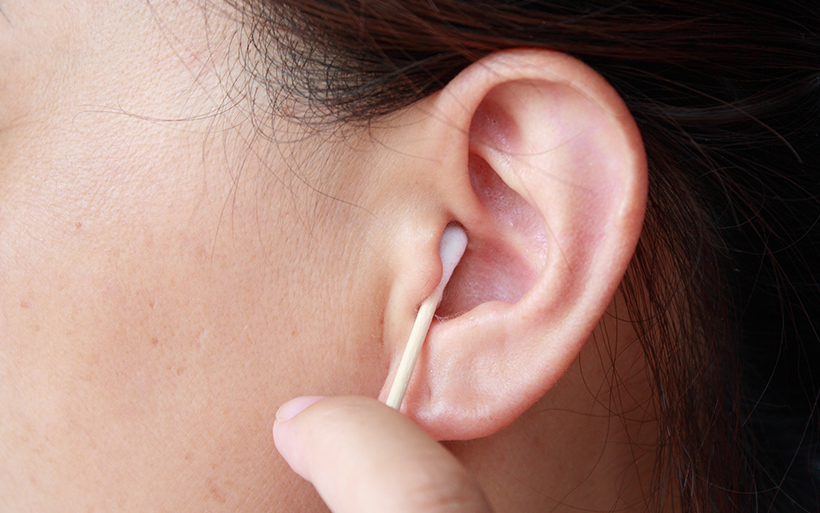
It’s tempting to presume earwax is the cause — and reach for cotton swabs or over-the-counter kits. In reality, physical poking often compresses the wax deeper against the tympanic membrane, making the impaction worse.
Health specialists caution that inserting anything smaller than your finger in your ear can result in tympanic damage and severe impaction.
In the same way, neglecting initial auditory decline can postpone care that assists in preserving interaction, safety, and well-being.
The Critical Nature of a Professional Ear Exam
A simple ear exam can quickly verify whether cerumen is blocking the canal.
If wax is found, safe extraction often resolves signs immediately.
If no wax is found, a diagnostic audiogram will be used to map the type and extent of any hidden loss.
Experts urge an immediate hearing check if you find yourself failing to interact or navigate your environment.
Final Points on Earwax and Hearing Health
Dampened auditory quality is hardly a certain marker of long-term loss.
Very often, the problem is simply a collection of cerumen that can be quickly resolved.
A professional evaluation will give you the answers you need to advance without worry.
Remember: The sole accurate way to tell the distinction between cerumen impaction and auditory impairment is with a professional evaluation.
Treating the concern immediately halts the stress of the unknown and places you on the path to improved auditory function.
If you’ve noticed a shift in your auditory ability, call our office for a professional assessment immediately.