
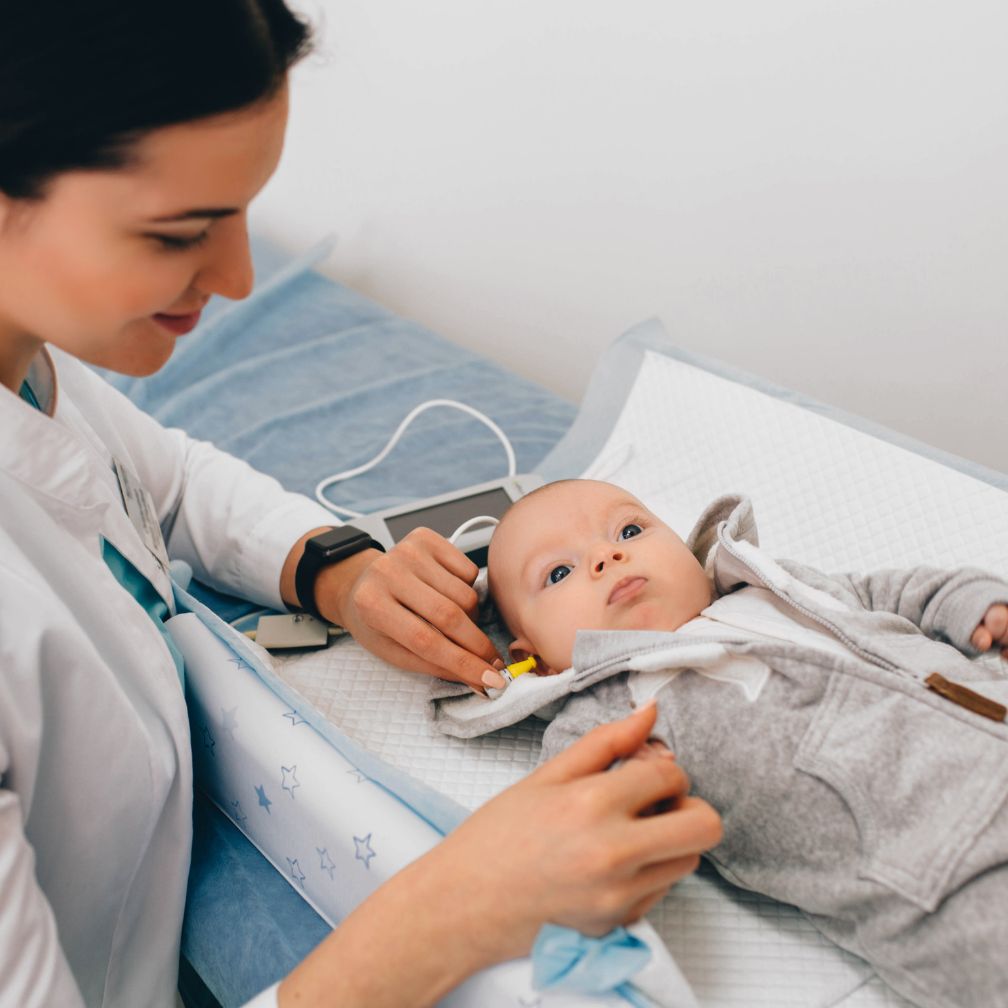
For first-time parents, discovering that their infant experiences auditory deficits remains extraordinarily shocking and painful. But the positive fact is that because of prompt medical testing and early intervention, young children with hearing deficits are positioned to prosper. Without doubt, such infants can learn language, social capabilities, and meaningful relationships within their community, securing a deeply fulfilling life!
Relying on modern hearing aids and advanced cochlear implants supplies two proven clinical methods for helping babies with hearing impairment. Within this detailed breakdown, we assess their core operations and outline how to select the right device for your child.
Exploring Causes of Auditory Loss in Infants
Hearing impairment across infants typically comes from various distinct health factors, such as:
- Random genetic variations (even within family trees lacking hearing loss history)
- Prenatal viral exposures including cytomegalovirus (CMV) or rubella
- Birth-related trauma, including neonate oxygen loss or preterm birth
- Particular pharmaceutical treatments administered within specialized newborn intensive units
Which effort carries the greatest weight? Rapid diagnostic confirmation. Because of this, newborns across the United States receive evaluations for hearing deficits before heading home. Experienced pediatric audiologists strictly uphold the standardized “1-3-6” care benchmark:
- Primary hearing check administered prior to 1 month of age
- Complete clinical diagnosis confirmed prior to 3 months
- Clinical intervention (utilizing corrective devices or speech habilitation) launched inside 180 days post-birth
Achieving these critical milestones gives infants the best chance for healthy speech, language, and brain development. If you wish for additional counsel regarding these evaluations, your family pediatrician will gladly help!
Infant Hearing Aids: Overview & Benefits
Regarding babies affected by mild to severe hearing loss, specialized hearing aids consistently serve as the primary intervention pathway. These tiny, wearable hearing tools enhance incoming sound, enabling babies to catch human speech and environmental audio more distinctly.
Specialized hearing devices for babies function as:
- Officially approved and safe for babies only a few weeks old
- Crafted featuring soft, skin-friendly ear inserts that get updated throughout early childhood development
- Assembled with tamper-proof battery doors and pediatric-specific safety elements
- Custom-programmed by a pediatric audiologist to fit your baby’s exact hearing profile
As your baby grows, their hearing aids require regular clinical updates to maintain ideal acoustic output and ear-canal fit.
Pediatric Cochlear Implants: An Advanced Solution
If a baby has profound to severe sensorineural hearing impairment and derives limited success from conventional hearing aids, a cochlear implant may be recommended. Differing from standard acoustic hearing devices, cochlear implant systems:
- Entail precision surgical insertion inside the inner ear delivering direct electrical signals to the brain
- Routinely bypass non-functioning sensory hair cells inside the cochlea
- Convert acoustic waves into precise electrical signals that activate auditory nerve fibers directly
State-of-the-art cochlear systems function as:
- Formally FDA-sanctioned for implementation in infants as young as 9 to 12 months
- Highest in overall efficacy when combined with early intervention services and active parental backing
- Advised strictly following rigorous joint evaluations by a certified audiologist and otolaryngologist
That pre-surgical path incorporates high-resolution imaging, detailed hearing tests, and realistic discussions regarding long-term developmental milestones.
Hearing Aids vs. Cochlear Implants: What’s the Difference?
- Mild to severe hearing loss targets Hearing Aids; Severe to profound hearing loss requires Cochlear Implants
- Non-Invasive: Hearing Aids; Invasive surgical installation: Cochlear Implants
- Acoustic sound amplification: Hearing Aids; Direct conversion to electrical signals: Cochlear Implants
- Starts at Infancy: Hearing Aids; Procedure starts at 9-12 months: Cochlear Implants
Closing Perspective: Choosing Between Hearing Aids and Implants
In the event your infant receives a hearing loss diagnosis, you can rely on excellent technological options alongside extensive professional backing. Under the care of specialized pediatric hearing doctors, many children go on to develop speech and language milestones fully matching their playmates.
Whether your youngster qualifies for external hearing aids or surgical cochlear implants, acting swiftly can make a lifelong difference.
Are you seeking answers about your child’s overall hearing wellness? Contact our staff today to arrange a comprehensive evaluation and customized treatment program.